Instant Arrest Warrant Lookup
Subject Name, Warrant Type, Status, Issue Date, Charges, & More
- This Search is Secure and Confidential
- Last updated on October 12, 2026
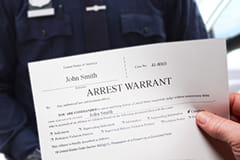
Active Warrant Reports
- Subject Name
- Date of Birth
- Warrant Number
- Warrant Status
- Warrant Type
All Warrant Types
- Issuing Court
- Judge / Magistrate
- County
- State
- Original Charge
All Warrant Details
- Charge Description
- Warrant Issue Date
- Service Date
- Law Enforcement Agency
- Extradition Eligibility
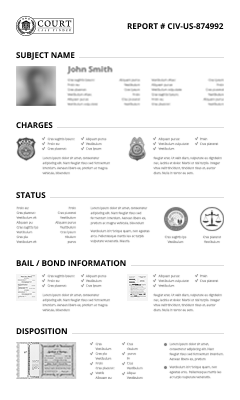
Providing Instant Active Warrant Reports
for Over 12 Years

Instantly Search Active Warrant Information Online

View Warrant Details Including Charges, Issuing Courts, Bond Amounts & More

View & Download Unlimited Comprehensive Warrant Lookup Reports
Arrest Warrants vs. Bench Warrants vs. Search Warrants vs. Civil Warrants *
Warrants are court-issued legal orders that allow specific actions by law enforcement or the court system. They are issued by a judge or magistrate after legal standards are met and are used to address matters, such as arrests, searches, or failures to comply with court requirements.
Although used interchangeably, arrest warrants, bench warrants, search warrants, and civil warrants each serve a different purpose. Knowing how they differ is helpful, especially when running a warrant lookup or reviewing court records.
Arrest Warrants
An arrest warrant is issued when a judge or magistrate finds probable cause to believe that a person committed a crime. This type of warrant authorizes law enforcement to locate and take the named individual into custody. Arrest warrants are part of criminal investigations and usually stay active until the person is arrested or the court officially cancels the warrant.
Bench Warrants
Bench warrants are issued directly by a judge, typically when a person fails to comply with a court order. Common reasons include failure to appear at a scheduled court hearing, failure to pay fines, or violation of court-ordered conditions. Unlike arrest warrants, bench warrants are not issued for new criminal charges but for failure to follow instructions in an existing case.
Search Warrants
A search warrant authorizes law enforcement to search a specific location or item, such as a vehicle, house, or electronic device, for evidence connected to an investigation. These warrants are narrowly defined, outlining exactly what may be searched and what may be seized. They typically have short execution windows and may no longer be publicly visible once served.
Civil Warrants
Civil warrants arise from noncriminal matters, such as unpaid child support, contempt of court, or failure to comply with a civil judgment. While they can still result in enforcement actions or temporary detention, civil warrants are based on civil law rather than criminal prosecution.
How Warrants Are Generated & Processed
Warrants are created through a structured legal process meant to balance law enforcement authority with individual constitutional rights. However, the exact steps may vary by state, court, and warrant type. The overall process follows a similar framework throughout the United States.
-
Probable Cause: Most warrants start with a legal issue that requires court approval. In criminal cases, this usually means law enforcement believes there is probable cause that a crime occurred. Officers or prosecutors submit a written, sworn statement explaining the facts that support the requests. In other cases, such as bench or civil warrants, the request may result from missed court dates, unpaid fines, or failure to comply with court orders.
-
Judicial Review: A judge or magistrate independently reviews the request to confirm it meets legal and constitutional standards before approving any actions.
-
Issuance of a Warrant: If the court finds sufficient legal grounds, the judge formally issues the warrant. The warrant clearly identifies its type, such as arrest, bench, search, or civil, and outlines what actions are authorized. Criminal warrants focus on alleged offenses, whereas civil warrants arise from missed hearings, unpaid obligations, or contempt-related issues.
-
Entry into Law Enforcement Systems: Once issued, the warrant is recorded in court dockets and often shared with law enforcement databases used during investigations or routine checks. Posting timeliness varies, which explains why a warrant may appear in court records before becoming available in public records.
-
Updates, Execution, and Recall: A warrant remains active until it is executed, resolved, or officially withdrawn by the court. Warrants may be cleared when an individual appears in court, fulfills required obligations, or when a judge determines the warrant should be corrected or recalled.
What Kind of Data is Available in Warrant Records?
Warrant records typically contain basic identifying and case-related information rather than detailed narratives. These records allow law enforcement and the public, where permitted, to track and verify enforcement actions. Warrant records typically include the individual's identifying information, warrant type, issuing court, and associated case details. While warrant records are generally public records, certain information may be unavailable to the public.
Data Category |
Typically Included |
Publicly Accessible |
Notes |
|---|---|---|---|
Identifying Information |
Name, known aliases |
Yes (limited) |
May exclude full DOB or addresses |
Warrant Type |
Arrest, bench, search, civil |
Yes |
Determines enforcement scope |
Issuing Authority |
Court name and jurisdiction |
Yes |
Identifies where the warrant must be resolved |
Case Information |
Case or docket number |
Often |
Links warrant to court case |
Charge or Violation |
Alleged offense or noncompliance |
Varies |
May be summarized or omitted |
Warrant Status |
Active, executed, recalled |
Often |
Status updates may lag |
Dates |
Issuance and execution dates |
Often |
Posting delays are common |
Restricted Records |
Juvenile or sealed warrants |
No |
Access is limited by law or court order |
How to Access Warrant Records
Access to warrant records depends on the issuing court, the type of warrant, and local rules. Some information may be available online, while full details are available offline. Knowing the proper access method ensures accurate record retrieval.
Online Warrant Lookup Options
Many counties and states now provide online portals that allow users to search for active warrants linked to criminal or civil cases. These systems typically display basic case information, warrant status, and issuing court details. However, states and counties may limit visibility to protect ongoing investigations or personal safety.
Some sheriff's offices or police departments publish active warrants lists, often focusing on arrest or bench warrants. These lists may be searchable by name, but they may not be comprehensive or updated in real time.
Also, third-party warrant search platforms provide a centralized means to search for warrant records across multiple jurisdictions simultaneously. This is especially useful when the county is unknown.
Offline Access
Offline requests are typically required to obtain complete or certified warrant information. The clerk of the court in the issuing jurisdiction usually maintains the official records and may confirm the details of the warrant. Record seekers may request the document in person or by mail.
Identification, Fees, and Processing Times
Persons requesting warrant information from agencies are typically required to provide proof of identity, usually a government-issued ID, to ensure that sensitive legal data is not misused and to protect personal privacy.
Fees and processing times for obtaining copies of warrant records vary significantly by state, agency, and method of submission (online or offline). Generally, online searches typically return results within a few minutes. For mail or in-person record requests:
-
In California, any sheriff's and court systems offer free basic warrant checks, but certified criminal history reports may cost around $25. In addition, requests for certified copies are typically processed within 2 to 4 weeks.
-
In Texas, the Department of Public Safety charges between $15 to $39.75 for each name-based warrant check, depending on if the document is requested by the record holder or a third party. Processing times typically 10 business days from receipt of the request.
-
States such as Illinois and Pennsylvania charge approximately $10 to $22 for a warrant record check and process the document within a few days.
-
In New York, a statewide search for warrant records incurs a $50 processing charge and a turnaround time of up to 3 weeks. Similarly, in Florida, warrant record requests cost about $25 and take 1-3 weeks to process.
How Long Does It Take to Find Warrants
The time required to locate warrant records varies by jurisdiction, the type of warrant, and the method of search.
Instant Online Results vs. Manual Searches
Online warrant searches typically return results within minutes, whereas manual requests to the court clerk's office or law enforcement, whether in person or by mail, may take several days or weeks.
Why Warrant Searches Return Partial Results
A warrant search may return partial results when the warrant details are restricted, recently issued, or not yet synchronized across court and law enforcement systems.
What Slows Searches Down
Warrant searches may be delayed if the search name is common, the warrant was issued across multiple jurisdictions, or the system has not yet been updated.
When Warrants Appear in Online Systems
Warrants may appear in online systems within hours or days of issuance, but some may take weeks depending on court processing times, database update schedules, and administrative backlogs.
Why Use CourtCaseFinder for Warrant Lookup
Finding warrant records can be time-sensitive and confusing, especially if the warrant was issued by different courts across multiple jurisdictions. CourtCaseFinder simplifies this process by bringing publicly available warrant and court data into a single, easy-to-use platform. Generally, CourtCaseFinder offers
-
Centralized warrant searches across jurisdictions: Because warrants are issued locally, they can be difficult to locate when someone has moved, worked, or traveled across jurisdictions. CourtCaseFinder helps bridge those gaps by expanding searches beyond a single location, making it easier to uncover warrants that might otherwise be overlooked.
-
Reduced direct contact with law enforcement: CourtCaseFinder also allows users to search remotely, avoiding the need to visit courthouses or contact law enforcement directly. This approach is beneficial for individuals seeking to determine their own warrant status discreetly, without unnecessary exposure to law enforcement.
-
Faster verification for legal and professional use: For attorneys, employers, and compliance professionals, CourtCaseFinder offers faster preliminary verification. CourtCaseFinder streamlines the discovery process, helping users quickly identify whether warrants may exist and which jurisdiction requires follow-up.
-
Identifying warrants before taking action: Confirming warrant status early allows individuals to make informed decisions. It also helps determine when legal counsel is needed, when court compliance is required, and how to prepare for the next steps with greater confidence.
Frequently Asked Questions about Finding Warrants
Can I check for warrants without knowing the case number?
Yes. Most warrant searches can be done using a full legal name and, in some systems, a date of birth, even when the case number is unknown.
Do warrants expire if they are not served?
In most jurisdictions, arrest and bench warrants do not expire and remain active until they are served, recalled, or resolved by a court.
Can I look up warrants anonymously?
Yes. Many online warrant lookup tools and public court search systems allow you to search anonymously without providing personal identification.
Will a warrant show up on a criminal history check immediately after issuance?
Not always. Warrants may not appear immediately on criminal history checks, as there is usually a delay between when a court issues a warrant and when it appears in law enforcement or criminal check databases.
Are out-of-state warrants visible in local warrant searches?
Usually not. Out-of-state warrants may only appear if they are entered into shared or national law enforcement systems.
Can a warrant exist even if I was never arrested or charged?
Yes. Warrants may be issued for missed court appearances, unpaid fines, or other forms of noncompliance with court orders, without a new arrest.
Do traffic violations result in warrants?
Yes, they can. Unpaid traffic tickets or failure to appear in traffic court may lead to a bench warrant.
Can warrants be issued without notifying the person involved?
Yes. Courts often issue warrants without advance notice to ensure compliance and prevent the person named on the document from avoiding service.
How can I tell if a warrant has been recalled or cleared?
You can tell if a warrant has been recalled or cleared by checking court records or law enforcement databases. They typically indicate when a warrant has been recalled, quashed, or executed.
Are federal warrants included in state or county warrant searches?
No. Federal warrants are handled through separate federal systems and will typically not appear in state or county searches.