Instant Eviction Record Lookup
Tenant, Plaintiff, Property Address, Eviction History, Case Status, & More
- This Search is Secure and Confidential
- Last updated on October 10, 2026
Eviction Record Reports
- Tenant Name
- Plaintiff Name
- Property Address
- Unit Number
- County
- State
All Eviction Types
- Case Number
- Court Name
- Filing Date
- Reason for Eviction
- Amount Claimed
- Hearing Date
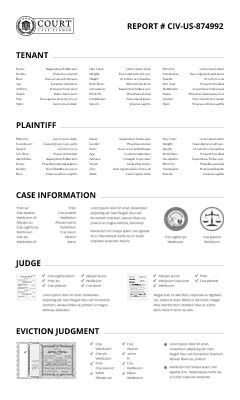
All Eviction Details
- Judge
- Judgment/Disposition
- Disposition Date
- Monetary Judgment Amount
- Case Status
Providing Instant Eviction Case Records
for Over 12 Years

Instantly Search Full Eviction Record Information Online

View Eviction Record Info Including Parties' Attorneys, Judges, Dispositions & More

View & Download Unlimited Comprehensive Eviction Record Reports
Eviction Records vs. Court Judgments vs. Writs of Possession vs. Rental History *
Eviction records document legal proceedings between landlords and tenants when a dispute arises over possession of a rental property. These records are created through housing or civil courts and may reflect filings, case outcomes, or enforcement actions.
When reviewing eviction-related information, it is crucial to understand that several distinct records may exist, each serving a different legal or administrative purpose. Knowing the difference between these records helps avoid confusion when reviewing criminal history reports, court filings, or tenant records.
-
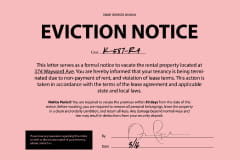
Eviction court records document the complete legal case initiated by a landlord. These records reflect the procedural history of the filings, including notices, court actions, and outcomes. A case file may exist even if the tenant ultimately remained in the property or the case was resolved without removal.
-
Court judgments reflect the court's final decision on a case. In housing matters, a judgment may order payment of unpaid rent, award damages to the landlord, order possession of the unit, or dismiss the case in favor of the tenant. Not every eviction filing results in a judgment, as some instances end before a ruling is issued.
-
A writ of possession is a separate enforcement order issued after a landlord wins possession in court. It authorizes law enforcement to carry out a physical removal when a tenant fails to vacate the premises following a judgment.
-
Rental history is not a court record. It is typically compiled by landlords or screening services and may include lease terms, payment behavior, or prior addresses. While it may reference an eviction, it does not have the same legal authority as official court documentation.
How Eviction Cases Are Generated & Processed
Eviction cases follow a structured legal process designed to balance a property owner's rights with tenant protections. Although specific rules differ by state and municipality, most eviction proceedings follow a consistent sequence from initial notice to final enforcement.
-
Notice Requirements Before Filing: The process typically begins when a landlord believes a tenant has violated the lease or rental agreement. Depending on the issue, this may require the tenant to pay overdue rent, correct a lease violation, or vacate the property. State law strictly regulates how these notices must be written, delivered, and timed.
-
Initiating the Court Case: If the tenant does not respond or comply within the required timeframe, the landlord may file an eviction lawsuit in the appropriate local court. This filing officially opens the case, creates a public court record, and assigns a case number. At this stage, the eviction becomes a judicial matter rather than a private dispute.
-
Service, Court Review, and Resolution: After filing, the landlord must properly serve the tenant with court documents. The court then schedules a hearing or trial, allowing both sides to present their case. The outcomes of the proceedings vary and may include dismissal, settlement, or a court-issued judgment.
-
Enforcement After Judgment: When a landlord is awarded possession, and the tenant does not voluntarily vacate, the court may authorize enforcement by issuing a writ of possession. This step typically involves law enforcement and represents the final stage of the eviction process.
What Kind of Data is Available in Eviction Records?
The type and depth of information available in eviction records can vary by jurisdiction, case status, and any legal restrictions on access. Generally, it includes:
Basic Case Information
Most eviction records contain identifying details to help locate the case, including:
-
The names of the parties involved
-
The rental property addresses
-
The court where the case was filed
-
A case number
-
The filing date
Case Status and Results
Court records may also show case outcomes, including:
-
Whether the case is active or resolved
-
Dismissal, withdrawal, settlement, or a court decision
In addition, when a judgment is issued, the record usually notes whether possession was awarded and may reference any approved monetary amounts.
Filed Documents
Eviction files typically include court filings such as:
-
The initial complaint
-
Summons
-
Proof of service
-
Motions
-
Court orders
-
The final judgment
If enforcement occurs, a writ authorizing removal may also be included in the filed documents.
Access Limitations
Although eviction records are generally public, specific details may be redacted or restricted to protect privacy or comply with sealing and expungement laws.
How to Access Eviction Records
Access to eviction records depends on where the case was filed, how old it is, and whether you require basic case details or certified court documents. Courts generally offer both online and in-person access, with availability varying by jurisdiction.
Online Warrant Lookup Options
Many county and state court systems offer online case search portals that include eviction or unlawful detainer cases. These platforms typically allow searches by party name, case number, or rental property address. Some courts publish the complete docket histories and scanned filings, while others limit access to case summaries and status updates.
When the specific filing location is unclear, third-party public record search tools can help identify possible matches across multiple courts, though results depend on local reporting and update frequency.
Offline Access
For complete case files, certified copies, or older eviction records, a visit or contact with the court clerk is generally required. The clerk's office serves as the official custodian of eviction records and can provide access to judgments, orders, and writs of possession. Archived cases may require additional retrieval time if stored off-site or in long-term archives. Requests are usually accepted in person or by mail.
Identification, Fees, and Processing Times
Eviction record requests at the courthouse generally require valid identification, especially for certified copies. This is to ensure the courts can verify the record seeker's eligibility to access the document and to protect sensitive information.
Fees and processing times vary by state, court, and whether the record is recent or archived. For instance:
-
In many California courts, copies of court records are typically $0.50 per page, while certified copies cost about $40 per document. If the clerk spends additional time locating a record beyond the initial search, some courts may charge a $15 search fee. Processing times for eviction records ordered by mail or in person take about 1-3 weeks.
-
Record request fees vary widely across Texas. Generally, basic copies cost up to $1 for the first page and under $0.50 per page for subsequent pages. Certified copies of eviction records cost between $5 and $10. Processing times are around 5 to 10 business days.
-
In New York, many cities or counties charge around $0.65 per page for copies and about $8 plus $0.25 per page for a certified record. The typical turnaround time for mailed requests is 2-4 weeks.
Public vs. Sealed Eviction Records
Eviction records are generally considered public records, meaning landlords, tenants, and the public can access basic case information, including party names, property address, case number, filing date, docket entries, and outcomes. Courts often make this information available online or at the clerk's office.
However, certain eviction cases may be sealed or expunged, restricting public access. This usually applies to dismissed cases, settled disputes, or tenants qualifying for hardship relief. Some states provide a legal pathway for tenants to request the sealing or expungement of their records after meeting certain conditions, such as a waiting period, proof of compliance, or participation in diversion programs.
Although sealing and expungement remove eviction records from public access, the records may still appear temporarily online due to caching, third-party aggregations, or delayed updates.
Eviction Records and Tenant Screening
Eviction records are typically reviewed during tenant screening to help landlords understand an applicant's rental history, and their use is regulated by federal and state laws to ensure accuracy and fairness.
Typically, eviction filings and outcomes can appear on tenant screening reports for up to seven years. Depending on the screening company's data sources, reports may include cases that were settled, dismissed, or resulted in a judgment. Some states have stricter rules, such as limiting the reporting of dismissed cases or requiring that records be removed sooner when they are sealed or expunged.
Tenants have the right to dispute inaccurate or outdated eviction information. Screening companies must investigate disputes and correct or remove unverifiable data to ensure landlords make decisions based on reliable, current information. This process helps protect renters and property owners.
Why Use CourtCaseFinder for Eviction Records Lookup
Local courts maintain eviction records. These records are typically distributed across multiple county systems, making them difficult to locate. CourtCaseFinder simplifies eviction record searches by providing multi-county, multi-jurisdictional access in one place. This broader coverage helps users avoid time-consuming courthouse visits and the need to repeat searches across individual court systems.
By consolidating available case data, CourtCaseFinder saves users time by allowing them to confirm whether a record exists before requesting certified copies from the court. For professionals and individuals alike, it enables faster, more efficient verification of eviction records before proceeding.
Frequently Asked Questions about Finding Eviction Records
Can an eviction record exist even if the tenant moved out voluntarily?
Yes. If a landlord filed an eviction notice with the court, the record may still exist even if the tenant vacated the property before the case was resolved.
Do eviction records show the reason for the eviction (nonpayment, lease violation, etc.)?
Generally, they do. Court filings may list the legal basis for the eviction, such as unpaid rent or a lease violation, though the level of detail varies by court.
Can landlords see eviction filings that were never served on the tenant?
In many jurisdictions, yes. A case may still appear in court records even if service was unsuccessful or the case was later dismissed.
Do eviction records appear on credit reports automatically?
No. Eviction filings themselves do not automatically appear on credit reports, though related judgments or unpaid debts may be reported separately.
Can an eviction record affect buying a home or getting a mortgage?
Eviction records do not directly affect the ability to buy a home or obtain a mortgage. That said, lenders focus on credit, income, and debt; unpaid rents, judgments, or collections tied to an eviction may negatively impact creditworthiness.
Are eviction records shared between states?
Court systems are state-based, but many tenant-screening companies operate nationwide databases. This means an eviction filed in one state may appear in screening reports used in another state.
Can a landlord file an eviction that never goes to court?
No. A landlord can start an eviction process by filing paperwork. Once filed, it becomes a court case even if it never reaches a hearing. If no court filing occurs, then no official eviction record exists.
How do eviction diversion programs affect eviction records?
Diversion programs pause, dismiss, or seal eviction cases. In some jurisdictions, successful participation may prevent the eviction from appearing in public searches, while in others, the filing remains but is marked as resolved.
Can eviction records be hidden from online searches without expungement?
Sometimes. Some states limit public access to online eviction case records after dismissal. However, without expungement or sealing, the record may still exist in court files.
What is the difference between an eviction filing and an eviction on record?
An eviction filing means a landlord submitted a case to court. An eviction record refers to a completed case, especially one with a judgment or writ of possession.