Instant Judgment Lookup
Defendant, Plaintiff, Case Type, Case Status, Judgment Amount & More
- This Search is Secure and Confidential
- Last updated on October 27, 2026
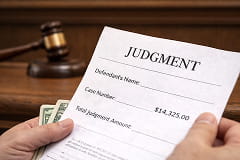
Judgment Reports
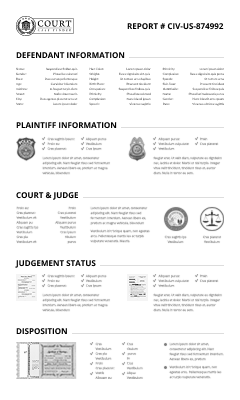
- Defendant Name
- Plaintiff/Creditor Name
- Case Number
- County
- State
All Judgment Types
- Court Name
- Filing Date
- Case Type
- Judgement Amount
- Judgement Status
All Judgment Details
- Judge
- Disposition
- Total Amount Owed
- Case Status
- Court Reference Number
Providing Instant Judgment Records
for Over 12 Years

Instantly Search Full Judgment Case Information Online

View Judgment Filing Info Including Defendant, Plaintiff, Judgment Amount & More

View & Download Unlimited Comprehensive Judgment Reports
Judgments vs. Lawsuits vs. Liens vs. Bankruptcies *
Understanding what a judgment, lawsuit, lien, and bankruptcy are will make it easier to use public court records. Each represents a different phase or category of litigation, each with its own consequences and process. Knowing the difference between them can help you navigate the court records better and understand the consequences that each one brings.
A judgment is a decision by a court that settles a dispute between two parties. A judgment often comes with an award of damages. Following a trial or settlement, judgment is recorded with the court, establishing a legally binding obligation for the losing party to comply.
A lawsuit is a legal action that initiates a civil dispute between two parties. Many lawsuits are never determined at a trial. They might get dismissed or settle out of court. Some lawsuits are withdrawn before a decision is made.
A lien refers to a legal claim against a person's property for the payment of debt or a judgment debt. If a party secures a judgment for damages, they may file a lien against the debtor's real estate or personal property to help collect payment on the judgment.
Bankruptcy is a federal court proceeding in which an individual or business seeks relief from debt. Through bankruptcy, you can eliminate or restructure debts, including some judgment debts, too. Depending on the bankruptcy type and the debt involved, some debts and liens can still remain after discharge.
Types of Judgments Commonly Found in Public Records
Judgment types vary. The way judgments are passed and implemented depends on the court, the dispute, and the jurisdiction where the case was tried. When you get familiar with the different types of judgments, you can easily interpret public records, assess your options for enforcement, and know where to look up the information.
Civil Money Judgments
One of the more common types of public records is civil money judgments. It is a court order requiring an individual to pay a specific amount of money to another person, usually as a result of a judgment in a debt collection lawsuit, contract dispute, property dispute, or personal injury claim. Most of the time, this total amount includes the original claim, costs of court, and sometimes interest accruing until the debt total is paid.
Default Judgments
A default judgment is when a court rules against a defendant for failing to respond to a lawsuit on time. If the defendant was duly notified, but no response was submitted, the judge may issue a default verdict in the plaintiff's favor. Even without a trial, the judgment is just as enforceable as one issued after a hearing.
Small Claims Judgments
Small claims judgments are made by lower courts. Through simplified procedures, these courts ensure that issues are settled faster and with minimal cost. Although the amounts at stake are smaller, the judgment can still be enforced through wage garnishment or a lien against property.
Federal Court Judgments
Judgments in federal court are issued by the United States District Courts in civil actions arising under federal law, between parties of different states, or in other qualifying circumstances. When a judgment is entered into the federal docket, it can be enforced using federal enforcement procedures in any state.
Administrative or Agency Judgments
Certain government bodies are empowered to make administrative decisions that are treated as judicial rulings. These can be civil penalties or enforcement orders. If properly documented or verified, they may have legal force and, in some cases, can be enforced like a court judgment.
How Judgments Are Generated & Processed
A judgment is the result of a civil court case as it moves step by step through the judiciary. Generally, while procedures for generating and processing judgments differ by state and court, the overall path from filing to enforcement is fairly predictable across the U.S.
Filing a Civil Case: It all begins when a person (the plaintiff) files a complaint with the suitable court. The complaint will explain what happened, why the plaintiff believes he is entitled to relief under the law, and what the plaintiff seeks from the court. The court then issues the summons, and the defendant must be notified through a process called service of process. This is an important step because it ensures that the defendant is given the opportunity to respond before a judgment is entered.
Court Proceedings: Here, the court hears the case. The parties may file motions, conduct discovery, participate in hearings, and negotiate a settlement. If the matter is still unsettled, it goes to court. A judge or jury will determine who is at fault and the amount required to compensate the other party.
Entry of Judgment: After the trial, the court will enter judgment if it accepts a settlement or if there is a default. The ruling is entered in the court record and states the amount or relief awarded. The ruling is now legally enforceable.
Post-judgment Enforcement: If the party that lost does not comply with the court ruling, then the party that won can enforce the ruling. According to the provisions of various state laws, a creditor may, with the court's permission and after a court order, garnish wages, levy on bank accounts, record judgment liens, and seize property.
Satisfaction or Expiration: The court judgment is resolved when payment is made, and a satisfaction of judgment is filed with the court acknowledging such payment. In some cases, a judgment will expire after a certain period established by statute. In many states, however, it is possible to renew a judgment before it expires in order to extend the judgment's enforceability.
What Kind of Data Is Available in Judgment Records
The outcome of a civil case, together with any financial obligations that arise from it, is recorded in judgment records. Although the specific details available can vary from court to court and jurisdiction to jurisdiction, most records have a standardized format. The following table summarizes the types of data present in a judgment record and whether they are available to the public or not.
Data Category |
Typically Included |
Publicly Accessible |
Notes |
|---|---|---|---|
Party Information |
Plaintiff and defendant names |
Yes |
Business entities are commonly listed |
Case Details |
Case number, court, filing date |
Yes |
Core docket data |
Judgment Amount |
Damages, interest, costs |
Yes |
May include post-judgment interest |
Status Information |
Active, satisfied, vacated, appealed |
Often |
Updates depend on court filings |
Enforcement Data |
Garnishments, liens, levies |
Often |
May appear in related records |
Restricted Data |
Sealed documents, personal identifiers |
No |
Redacted for privacy or court order |
How to Access Judgment Records
You can find judgment records in the court that issued the ruling. In certain instances, if the judgment was recorded as a lien on property, it may also be available at the county recorder's office. To access the record, you will have to refer to the court, the age of the case, and whether you just need basic information or a certified copy.
Online Judgment Lookup Options
Many state and county courts now have online case search. You can often search for files by party name, case number, or filing date on the system. Once found, the basic docket entries, judgment amount, and current status of a case may be displayed.
Nationwide Public Access to Electronic Court Records (PACER) provides access to the U.S. District Court dockets and related documents for federal civil cases. You may search by party name, case number, or district.
Third-party search platforms also compile judgment data from various jurisdictions into a single database. These resources can help you if you don't know which court handled it. However, the sources these platforms use to collect data usually determine the availability of their records and how quickly they can update their databases.
Offline Access Options
If the document isn't fully accessible online, or if you want a certified hard copy, you'll need to reach out to the clerk of court where the matter was filed. The clerk keeps the official file and will provide you with a copy of the judgment.
If the judgment has been recorded as a lien, it may also be filed with the county recorder or land records office in a case involving real estate.
If the court case is an older one, particularly one that was filed shortly before the courts went digital, the file may need to be pulled from the archive.
Identification, Fees, and Processing Times
In most courts, basic online searches for judgment records are free and don't require any identification. However, the courts demand formal requests, a valid government-issued ID, and payment before a party can obtain official or certified copies of judgment documents.
-
The copying fees for Federal courts (PACER and district records) are usually around $0.10-$0.50 per page, plus a certification fee of about $11-12 per page. There is a fee of up to $34 for the clerk's time if manual searches are conducted in some federal districts.
-
In Florida, certified copies can cost $1.00 per page, plus a $2.00 certification fee. In-person requests for a certified copy are usually processed on the same day or 1-3 business days, while mail requests are typically processed within 5-10 business days, depending on volume.
-
In New York, there is a charge of about $5.00 for every certified judgment record request. It takes 4-6 weeks to process a mail request and 2-5 business days for an in-person request.
-
In Wisconsin, certified copies will cost about $5.00, plus fees per page. Furthermore, a basic record search costs $5.00 per name. Walk-in requests for certified copies are usually processed the same day or within a few business days, while mailed requests typically take 5-7 business days.
-
In New Jersey, certified copies cost about $15, and plain copies cost about $0.05-$0.07 per page. Certified copy requests submitted online or in person are generally processed within 3-10 business days.
How Far Back Judgment Records Go
The extent to which you can trace a judgment record varies by state, court level, and how the records have been maintained over time. Each state determines the duration for which civil court judgment records must be maintained. In several jurisdictions, records of judgments are on file for years, and they are usually kept as long as the judgment is still enforceable.
Some states allow judgments to be renewed. In such states, this further extends how long the judgment is enforceable and, in turn, how long the record remains active and traceable in the court system.
Usually, older judgment records are moved to archival storage rather than destroyed. In rare cases, older files might not contain complete information due to courthouse relocations, reorganisations, or historical record loss.
Judgments filed prior to the adoption of e-court systems by the courts (in the 1990s or early 2000s) were recorded on paper (bound docket books) or microfilmed. In many jurisdictions, these records still exist, but they may not be searchable online.
Generally, you can find recent judgments online easily, but if you're searching for an old judgment, you might have to get in touch with the clerk's office directly and request an archived file. This process may take time and may incur extra costs or research fees.
Public vs. Sealed Judgment Records
Court judgments are typically public records. Accordingly, once a judgment is registered on the court record, it usually becomes part of the public record. The judgment records are available to the public either through the court's online portal or the clerk's office.
Though judgment records are generally open to the public, public access can be restricted, but only in rare cases. A court may seal a judgment to restrict public access to certain filings. This usually happens in cases with protective orders, privileged parties, or statutory protections.
The court can vacate a judgment, meaning it can cancel its decision. This happens if there was a glaring procedural mistake, a post-fact settlement, or the defendant's appeal was successful. When a judgment is vacated, the court docket will still show that the judgment was entered and then vacated.
It is highly uncommon for a judgment record to be almost completely hidden from public scrutiny unless the entire court file has been sealed by a legal authority.
Judgment Records and Debt Collection
A debt may be disputed before a judgment is given. But once the court enters a judgment, it becomes legally enforceable, and the winning party has the right under state law to pursue collection.
Judgments do not last forever, but they remain enforceable for many years. The duration really depends on state law and can range anywhere from a few years to decades. When the proper legal steps are followed, some states allow creditors to extend a judgment through judicial or administrative proceedings before it expires, extending the collection period. However, the enforcement period differs from record retention: a judgment may still appear in the court records even after it is no longer enforceable.
A money judgment can become a lien if it is properly filed with the county office where the debtor has property. This action results in a lien on real property and sometimes on other property. When a lien is recorded, it can affect the debtor's ability to sell or refinance the property because the judgment must be satisfied or resolved to transfer a clear title.
When a judgment is paid or otherwise settled, the creditor normally must file a satisfaction of judgment. This record formally notifies the county or the court that the debt has already been paid. This judgment will usually remain on your docket even after payment has been made. It shows that the obligation has been fulfilled.
Why Use CourtCaseFinder for Judgment Search
Finding judgment records can be time-consuming because cases are handled at the county, state, or federal level, and each court has a separate system. It often involves conducting various searches on different websites. CourtCaseFinder makes it easier for you to find judgment records across different jurisdictions.
-
Centralized Multi-County Searches: It can be difficult to determine the location where a judgment was filed if a person has lived or done business in more than one county. CourtCaseFinder streamlines this process by allowing users to search across multiple counties in one place, rather than court by court.
-
Less Switching Between Portals: There is no standardization in court websites. They all work differently, with different layouts and search rules. Using a single, streamlined platform saves valuable time while minimizing the risk of missing important records.
-
Faster Due Diligence: Before making decisions, attorneys, lenders, landlords, and investors may require verification of whether judgments exist. CourtCaseFinder enables faster preliminary research by allowing users to identify active or satisfied judgments that may affect financial or legal risk.
-
Confirm Judgment Before Ordering Copies: Before paying for certified court copies, it's helpful to confirm that a judgment exists and identify the correct court. CourtCaseFinder allows users to verify basic case details first, which can help reduce unnecessary fees and extra administrative steps.
Frequently Asked Questions About Judgment Searches
How can I search for civil court judgments by name?
You can search civil judgments by entering a person's full legal name into the appropriate county, state, or federal court. Confirming details such as a middle name, address, case number, or similar information can help you ensure you have the right person.
What types of judgments are included (civil, small claims, default, tax, lien-related)?
Judgment records typically encompass civil money judgments, small claims decisions, default judgments, certain tax judgments, and judgments that may ultimately be recorded as property liens.
What is the difference between a satisfied judgment and a vacated judgment?
A satisfied judgment means the debt is paid, and the court's record reflects such payment. A vacated judgment is one that the court has canceled or set aside as invalid.
How can I verify if a judgment is still active or satisfied?
Reviewing the case docket will let you know if a satisfaction of judgment was filed, if the judgment was renewed, or if it has expired.
Can I see the judgment amount?
Yes. The majority of judgment records indicate the amount awarded as principal, with court costs and interest (if any).
How long do judgments remain enforceable?
The enforceability of judgments varies by state and can last for years or decades, with some being renewed in other states as sanctioned by their respective jurisdictions.
Can I search judgments across multiple counties or states?
Certainly, but as judgments are filed locally, an inquiry covering numerous counties or states would need to access several court systems or aggregated search tools.
What does "default judgment" mean in court records?
A default judgment means the court ruled in favor of the plaintiff because the defendant did not respond or show up.
Can I access related case filings tied to the judgment?
Usually, yes. The same case docket often contains access to related documents such as the complaint, motions, and court orders.
Are out-of-state judgments enforceable in another state?
Generally, yes. Once properly registered, a judgment from one state is enforceable in another state.
Does paying a judgment remove it from public records?
No. Commonly, the record is always visible, but once it's paid, a satisfaction of judgment is filed to update the record and show that the debt has been paid.
Can a judgment be vacated or expunged?
If the court finds sufficient grounds to vacate the judgment, it will be vacated. Expungements are uncommon in civil cases and depend on state law and the court's approval.